Sunday, September 28, 2014

Too Much I Cannot Fix


Al-Quaida network in Syria, Missouri shootings of two Officers, Indiana State University campus shooting, No Troops on the Ground, oil refineries destroyed, five family members found dead in Utah home, Oregon teen accused of bringing homemade bomb to school, etc., etc., etc. are all part of one news site on a single day! We are worn out! The rapid fire tragedies are so quick that we cannot keep track. Most frustrating of all is that there is little we can do about any of it, other than talk, worry and feel helpless and depressed.

It is such a relief to leave the cell phone and computer as I walk the streets of the colonias. I meet a family whose child is dying because they cannot afford the bus tickets to the hospitals in Monterrey where their child can receive chemotherapy. The insurance pays the cost of the treatment. Their child is dying because they cannot raise $300 for bus fare. That we can easily fix! Check that off: child’s life saved. Next? A wonderful afterschool program for children ages 4 through 7 needs $1500 a month to keep open. Without the program these children go home to empty houses because their parents do not get off work for another four hours. Check that off! Next? The Vargas family is selling plates of food and organizing a raffle so that their child can have surgery, but they are not able to reach the amount needed. We provide ingredients for the meals and a few raffle prized. They now will earn enough to pay for the surgery. Check that off. We learn about an old couple in their 80’s that need help. We call the Divine Providence Nursing Home (that we help to support). Immediately the board director arranges transportation and a place for the couple at Divine Providence. Check that off.

I can’t solve many problems, but those that I can solve get solved. The people we help are doing all that they can do to solve their own problems, but sometimes a little help makes all the difference. We are not just tossing money at problems and we are not just talking about what we are ‘gonna do’. We work with the families, schools, DIF (social services), Mexican charities, managers and house parents at shelters and make things better. I can’t cure a child of cancer, but I can help the child in his or her fight. I am too dumb to even suggest a solution to the problems in the daily news. I can only try to help to give the poor a fighting chance.
Fix what I can. Do it right now.

Saturday, October 19, 2013

Thinking About Christmas

We've set the dates for our Christmas Mission (December 13-15) and are now walking around contemplating this mission trip.

I feel like the character in Marathon Man when I am asked, "Is it safe?" and am confused by the question. There is far less violence in the city of Acuna than in any major U.S. city. The over-reporting of 'cartel violence' by our news media includes the crime from the entire nation of Mexico since 2006. Eliminate those engaged in the drug trade and those smuggling people and there is very little violence in the entire nation.

Two years ago there was a police pursuit in broad daylight that ended in gunfire. As in almost 99% of fights between authorities and the bad guys, the bad guys won. That same year there was a murder of an alleged cartel supporter.

During that same time, in California there were innocent people injured at a McDonalds during a drive-by shooting. In fact, if you check the FBI reports on the internet, since 2006 we've had more murders than Mexico and we are not involved in military operations against drug lords.

I feel safe. I walk the streets at least twice a month and feel no danger.

We will have a good Christmas Mission. Our plan is to meet at the Ramada Inn, Del Rio, Texas, on Friday evening. We will have a breakfast meeting on Saturday at 7 a.m. and board our van for the 10 minute ride into Acuna, Mexico. We will pick up groceries to distribute as we walk door to door and visit families. Over the next two days we hope to visit a shelter for children, visit a shelter for the elderly, host a Christmas Fiesta, meet many severely challenged children and share time with old and new friends.

We have requests for us to visit from 10 different schools, hospitals and shelters. So I have choices to make and plans to complete.

Hopefully, I can accommodate requests from those signing up for the mission. Many have been here on other mission trips.

All I am certain of is that this will be a wonderful start of the Christmas Season. click for details and sign up

Saturday, October 5, 2013

It is not supposed to be easy . . .

We continue to accept the challenges presented to us as we walk the colonias. Lately, we have encountered many children with severe disabilities. We visited a school that serves many of the more severely challenged children.

Parents are depressed and most know very little about the potential of their children. Many are constantly consumed with putting beans and rice on the table while caring for their child. We've met mothers that carry their child everywhere. They have no wheelchairs; these children need pediatric wheelchairs. Some children can hardly communicate simple 'yes' and 'no' answers. Many are malnourished. School teachers have no training to teach children with special needs. Even the special education teachers have very limited training. There is no help for a blind child to learn to read Braille. Many of the mothers suffer from deep depression and anxiety.

It is too easy to say, "This is not my problem".

So, we move forward. We are already working with DREAMS to secure one pediatric wheelchair. We are working with teachers and with families. We are working to have families receive weekly psychological help. We are also developing a long-range plan.

We will 'find' the money. People will ask why we help in Mexico when we have so many similar situations in the USA. In the colonias, the situation is compounded by the extreme poverty. Families that live for a week on $6 worth of groceries and parents that skip meals so that there is enough for their children are financially crushed by the needs of a disabled child. They cannot afford the cost of transportation for their children to receive physical therapy. Some carry their child to the outhouse.

We will do what we can with what we have today.

Sunday, September 22, 2013

Walking Around

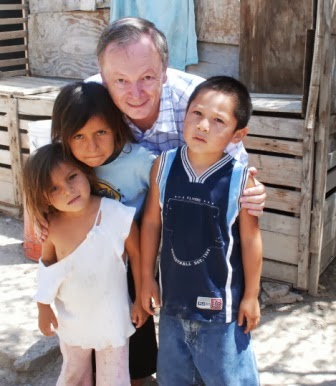
Walking the streets remains the best way to help the people in real need. Visiting families in their homes and walking through the neighborhood brings us to many people with needs. Often a neighbor will tell us about a child two doors down that needs surgery or an elderly couple in need of food. We witness the need, verify the situation with neighbors and know that when we help we are good stewards of donations.


Seldom to people ask for our help. In fact, it sometimes takes several visits before we can discuss ideas for improving a situation. Sometimes it takes several visits to gently ask about needs. For example, we helped a family with the cost of transportation to Monterrey (a 5-hour bus ride) so that their child can receive chemotherapy for many weeks. We were finally told that the doctor scolded the family because their son was not eating enough nutritious meals and this caused him to become very, very ill after the chemotherapy. The parents simply nodded and kept their heads down as the doctor told them to feed their child better food. What the doctor fails to see is their home, their budget and their inability to provide better meals.

After bottled water, city water, electricity and local transportation is paid the family had $6.00 to spend for the week's groceries. Six dollars to feed a family of four for an entire week. On weeks when the father misses work to take his child to the hospital in Monterrey the family has $4 for the week's groceries.

Obviously we cannot simply buy vegetables and meat for the one child that receives chemotherapy. We must supplement the diet for the other child, also. So helping a child to fight cancer involves bus tickets and groceries. We would never know this except for the regular home visits and building a friendship that allowed the parents to tell us that they were 'bad parents' because they cannot even provide good meals for their children. They were so very ashamed an we did all we could to tell them that they were good parents who did everything possible for their children.

Walking the streets and simply being friends is probably the best thing that we do.

Sunday, July 28, 2013

School Begins

Yes, school has started. It is 102 degrees inside this classroom as the teachers teach and the children learn. Like their parents and grandparents, the children don't say much about the heat. They have a job to do.

Sometimes a child faints during class, but this is usually due to being undernourished and hungry. We don't see this situation where we provide meals for the children.

Today I am just outside of Acuna, in the farming and ranching colonias where the poverty is stark. The little school only has 65 children and one employee. He serves as the director, teacher and janitor. He lives in a very dilapidated one room house on the school grounds. There is no plumbing in the house and a garden hose from the school is his shower.

The children arrive hungry and most remain hungry throughout the school day. Parents sell meals at cost. They are prepared on a two burner hot-plate and served in an empty building. Many children cannot afford the meals, even though the price only includes the cost of ingredients. The teacher would help, but he has not been paid since June. His pay is always late and there are always excuses.

We want to take on this school and three similar schools as part of our free cafeteria program. We are meeting with politicians and parents at the schools and will help if the government does its part - including the timely pay for this poor teacher. Our past experience has been that the government will respond when we get involved with the people. Of course we invite the media.

The challenge will be new donors. $20 a month would do the trick.

Friday, June 14, 2013

An Update

Between January and May of 2013 I frequently saw the new State Police Special Team in Acuna. Dressed in black in black trucks, armored vehicles and carrying heavy weapons this police unit engaged in regular gun-battles with the Zeta Cartel. Some of their activities made the news in Mexico; many did not.

The local hotels were threatened if they continue to house this unit and local restaurants were threatened if they fed them. The unit eventually set up a camp and bought in their own food. Most people told me that this unit hunted down and killed 9 alleged cartel members each month.

The PRI party is now in charge and the quality and quantity of food that they subsidize at school cafeterias (including ours) has been lowered. We are supplementing the food and continue to feed thousands of hungry children.

Five schools in the ranching/farming community just outside of Acuna have asked us for help. Their primary need is food for the children. We are working on that project.

The DIVINE PROVIDENCE nursing home is under new management. We told the new board members that we would like to help, but they must take specific actions before we could approve regular help. "Fire the existing staff. They mistreat the elderly and siphon off the money. Organize some fundraisers and use your own money to begin repairs."  Within 4-weeks a new staff was hired. Nurses are on site 24/7. Charts that track each patient's medicine are now used. The roof has been repaired, windows have been repaired and the place is immaculate. Fundraisers and generous donations from the new board of directors made this possible. As on June 1, 2013 we are now sending $1,000 per month to help this wonderful place.

Sam's Park opened. When Sam Wiegman passed away last Easter his mother requested donations be made to Paper Houses instead of flowers, so that a playground could be built in the colonias. Christine and her husband visited the playground and were overjoyed at seeing the children playing on the toys. Christine delivered tiles that were made by friends and relatives and they will be incorporated into the concrete sign that honors Sam.


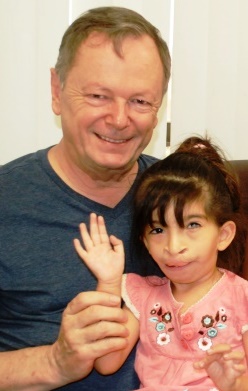
Little Lilliana is now 4 years old and we scheduled additional surgery for this child. She suffers with  only weighs 20 pounds, suffers from cleft-palette, and eye and ear problems.

The picture to the left was taken during one of our earlier meetings with Lilliana and her family. Surgery improved the infant's condition (see next photo with Bob), but now she is ready for more surgery to help with her cleft-palette, vision and hearing problems.

After the surgeries we will work closely with her family and a local pediatrician .

Monday, May 14, 2012

Nuevo Laredo

The news of the discovered bodies in Neuvo Laredo prompted a quick trip to the colonias and shelters of that city. My initial belief that these latest murder victims were involved in cartel activities was disputed by the local people. The heads and feet were hacked off and law enforcement only speculates about these victims. Many locals think that they might have been migrants and not even from this area. All that seem obvious is that the bodies were dumped to intimidate and to lay claim to the area.

The cartels and the U.S. media share the goal of publicizing horrific stories. I appreciate our free pres reporting these types of stories; it is the over reporting and repeated rehashing of the story that is disturbing. It is the reference to other murders that sometimes occured months ago and a thousand miles distant that I find disturbing. But, the cartels love the way the U.S. media strngthens their image.

Many, dare I say most, Americans view Mexico as an unsafe, violent country where the streets run wil blood. Few Americans envision that children playing and going to school or the millions of people that go to work every day. Few are aware of the thousands of U.S. citizens that cross the border to go to work in the factories aong the Mexican side of the border. This is the direct result of the way the U.S. media reported the violence in Mexico during the last decade.

In Acuna, Mexico I witnessed store closures and the complete decimation of the tourist industry as a direct result of that media onslaught. I know what you are thinking, "the drug violence was responsible for crushing tourism" and I understand why you would think so. The media. Here is a fact that might rock you: four years BEFORE even one person was injured by a cartel member in Acuna, the tourism came to a halt. Americans were afraid to cross the border at any point because of the misrepresentations in the US media. Acuan enjoyed a zero percent homicide rate and yet Americans from places like San Antonio, Houston, Detroit and other cities were terrified to enter Acuna.

Nuevo Laredo experiences frequent and unexpected violence. There seems to be no pattern in the location, time or day that violence will erupt. I would not take my daughters or their children into Nuevo Laredo. However, every charity and church group that no longer visits can still send financial help to what they used to describe as their 'friends'.  Many of the orphanages and shelters have an interesting opinion.

"For years they came on mission trips with rice and beans. They set up Bible Studies and many required us to attend their church service to get the rice and beans. They took many photographs of the children and our little houses. We are not stupid. They went home, displayed those photos and collected huge amount of money for their next mission trip to help us. They returned and gave us rice and beans. Now they cannot get people to come because of the violence. So they abandoned us and are apparently too afraid to mail a check to the orphanages. Instead, they go to other places for their mission trips. Their trips are more about making money than helping. If not, why can't they at least send a small check to some of the churches and orphanages that they used to claim as friends, On their websites they described the many contacts and close relationships they had with local churches and charities. Many of these groups were simply here to raise money, not to help."

I don't know if the suspicions of the people are true, but I understand their thinking. We have not and will not abandon them. We have no money worries because we remain an organization of volunteers. The money we receive reaches those in need.

Wednesday, April 11, 2012

Sam, We Will Keep You in our Thoughts

Sam Wiegman, 16 year old son of Christine and younger brother of Cordero, went home to his heavenly father on Easter.

Sam was in the 2nd grade when he first came to the colonias and he immediately had a heart for the people. Sam was polite and listened during our 'orientation' before the trip, but it was Sam's nature to experience things for himself. Sam learned much in the real world and he learned things that many of us failed to learn.

Watching him in the colonias was like watching boys seeking adventure in any strange environment, but Sam took risks that most of us never took. He risked rejection and risked appearing foolish when he immediately began playing with the kids of the colonias. During the early years, Sam knew no Spanish. He came from a life and place so different from the colonias that it was a marvel that he jumped right in to relationships with these children.

Sam made many trips to the colonias, every year. When on formal mission trips, he and Cordero were quick to find ways to help. They carried groceries, nailed walls, packed trucks with food for distribution and helped with the games and activities during fiestas. Sam and his brother experienced things denied to most children in the USA. They experienced befriending a little boy named Oscar who was dying of cancer. They visited a wonderful little girl named Lucinda who was dying of  progeria, an extremely rare genetic condition wherein symptoms resembling aspects of aging are manifested at an early age. He experienced unselfish giving.

Most of us give from our abundance. Sam asked his mother, "Mom, instead of us getting presents for Christmas, can we get presents for Oscar and his family?" 

Christine once reminded Sam that his birthday fell on the day of a mission trip. She asked if he would like to have a birthday party at home instead of returning to the colonias for another trip. Sam did not hesitate. He told her, "I want to spend my birthday with my Mexican friends." Sam frequently visited the colonias, but this put aside any doubt that he loved the colonias and hes Mexican friends.

Sam's heart and soul were in the activities of life. If we had asked Sam why he sacrifices his time to be in the colonias, he would not have understood the question. To him the colonias were life.

My future walks in the colonias will be filled with Sam. I will walk the places he loved the best and will also search for new friends in new places. My visit next week will be to locate a place where we can honor Sam with a new playground for the children of the colonias.

Bob

Sunday, January 22, 2012

The New Year

Happy New Year!

Families in the colonias remain upbeat and hopeful. Poverty in the colonas is different from the poverty of America and here there is an expectation that things will improve. Poverty is not accepted among the poor as a way of life. It is inspiring to see a family buy a bag of cement and some cinder-blocks so that they can build their 'real house' and move from their cardboard shack. Little by little they make progress. Although it is tempting to provide the material they need, we believe that by providing a little help we do a much better thing. This will be their house and their family's accomplishment.

Some situations do require more help. We've sent a half-dozen people to the hospitals of Monterrey this month. Most are receiving treatment for cancer and all are children. In at least one case we know that things look dim, but we continue to do what can be done for these children. We stand with the families.

It is uplifting when we visit Pedro and Ambar. These two little children share the experience of losing a leg due to accidents. We helped both children by purchasing prosthetic legs (with the help of Giving Hope Worldwide and a couple from New Jersey). It is uplifting because both of these children are always laughing and playing. They remain happy. The children and their parents do not waste time on wishing things were different. Things are what they are and they focus on their blessings and what they can do to make their lives better.

I will be happy in this new year because I walk the streets of the colonias and surround myself with hard-working people that remain optimists.

Thursday, January 5, 2012

Ten Years - The time to start is right now!

Our tenth year of working with the poor in the colonias is an ideal time to consider what we've accomplished, how we've grown and what is next.

Ten years ago, things were easy for us. There was no dramatic outcry against Mexico because of immigrants. There was no mass media blitz focused upon every cartel crime in Mexico. The media had not yet destroyed the tourist industry in every border-town. Many other charities and even the Catholic churches in America sent groups to help in the colonias.

Today, much has changed. We seek fresh volunteers to work from their homes to help us. We are primarily focused upon helping children with severe medical needs. We continue to walk the streets of the colonias.

The first step in helping us is to recognize that there will never be a perfect time to begin. Simply start helping. The person you will help the most is the person you will see in the mirror each day.

Sunday, December 4, 2011

Christmastime

Paper Houses cannot bring Americans into the colonias this Christmas because of the recent violence in Acuna. Consequently, we must do more to help the poor in the colonias. Bob will be in Acuna every week and will provide as much medical care for the children as possible. He will also deliver food door to door and help churches and charities with Christmas Fiestas for the children.

The weather is already rainy and cold. By Tuesday, the temp will dip into the 20's. Pajamas, blankets and socks are the order of the day.

We need your support, today. For the price of a trip to the movie theater, we can help three children in real need.

As always, we have no paid employees and every dollar actually helps these wonderful children and their families.

Sunday, June 12, 2011

Border Violence

Recently over a ton of drugs was seized at the Del Rio/Acuna checkpoint. Recently a counterfeit Border Patrol Vehicle, painted to look exactly like an official Border Patrol van, was followed after it entered Del Rio and the driver was arrested. The vehicle contained uniforms, guns and drugs.

Both of these incidents suggest that drug activity in Acuña is increasing. The level of sophistication in duplicating a U.S. Government van suggests big money and cartel involvement.

There have been no reports or evidence of violence in Acuña for over a year. A few mission groups have recently been seen in Acuña, but it is difficult to gauge real safety issues.

This week I will meet with a large group of families that live in the colonias and I will spend a day walking the streets to get a better feel for the safety issues as it pertains to mission groups.

Saturday, March 12, 2011

Response to Cartel

The road less traveled . . .

Our Response to the Violence in Mexico
Paper Houses Across the Border continues to work in the streets of the colonias in Mexico, along the Texas border. We research news stories about the violence along the border and urge everyone to read these stories carefully and check the facts.
Every day, according to FOX News, they report about the violence in Mexico. As you listen, watch and read these stories note that almost every story includes a rehash of a previous story or stories about the violence in Mexico. Even a story about citizens protesting in Mexico City in favor of stricter drug laws and more enforcement included 19-paragraphs of previously run stories about the violence in Mexico. (After reading that story, one can easily forget that the new story was about the citizens support of the government crackdowns).

It seems that the media is so focused on proving that Mexico is a bad place and that the government is losing the drug war, that they are incapable of simply reporting the news. Although two horrible ambushes recently occurred where police were killed, almost every other encounter between the police/military and the drug-cartels resulted in overwhelming victories by law enforcement.

How Do We Respond?

Like most Mexican problems, we believe that a Mexican solution is required. We also believe that we are called to continue our direct one-on-one support of the working poor and the institutions that help the working poor to succeed. Our observation is that the cartels control every Mexican border-city. The violence is primarily among cartel members, although many businesses pay protection money to a cartel that is nothing more than a shakedown. The city police are not charged with investigating crime and are ill trained and armed.

Reliable Information is Rare
It is commonly believed that any report to the police is given to the cartel by the police. The cartel then deals with those making police reports. Reporters are intimidated. Even the U.S. reporters are seldom found in Mexico. Rumors abound about kidnappings and extortion.

We respond by being with the people. We walk the streets and help with food, clothing and family needs. We help with medical situation. We help by supporting shelters for children, feeding thousands of school children every school day and by supporting a drug rehabilitation shelter. We support a migrant shelter that is overwhelmed with returning migrants that entered the U.S. from Arizona and were deported to Acuña. (The shelter provides medicine, food, clothing and helps migrants return to their villages). We help by walking door-to-door so that the people know we are still with them to help them in their effort to climb out of poverty.
We also help by talking with fellow Americans. We are all concerned about illegal immigration. A fair bit of hand-wringing, high minded rhetoric and ideas about addressing the symptoms of overwhelming poverty (illegal immigration) abound. We offer real help to the Mexican people by helping them to help themselves. We also point out the facts about the news stories related to the violence along the border.
It has been one-year since any murder took place in Ciudad Acuña. Long before that murder and before the Zeta arrived in Acuña, the U.S. media destroyed the entire tourist industry in Acuña.

If the media needs to focus on a daily story we wish they would report every day, the real story of our time. “Yesterday, an estimated 20,000 children died worldwide from preventable diseases.” Think what a constant focus on that daily fact could accomplish!

Wednesday, September 29, 2010

Good to be Small

(AP) Nearly nine months after the earthquake, more than a million Haitians still live on the streets between piles of rubble. One reason: Not a cent of the $1.15 billion the U.S. promised for rebuilding has arrived. At fault: bureaucracy, disorganization and a lack of urgency.

Because Paper Houses Across the Border remains a small charity, we remain efficient, effective and direct. Typically, we spend donations within 5-days of being received. We drive directly to the homes of the people, personally assess each situation and take immediate emergency action.

Our actions often include long-term plans and we often seek partnership with a Mexican business, charity or group. We form these partnerships on the spot. We either bring the family with long-term or high-dollar needs to a business, charity, church in Mexico or we take someone from these places with us when we visit a family. Everyone knows that we expect an immediate answer and that we 'do not fool-around' when it comes to taking action.
"A hungry person does not get excited when you form a committee to discuss his problem. He gets excited about a sandwich!"

It is gratifying to tell Juan Pedro's parents to take him on the next bus to Monterrey where he will be immediately fitted with a prosthetic leg. We know this means that we must immediately raise $4,350, but our experience has always been that Americans will jump in to help when they see that every penny of their money is used to help children like Juan Pedro.

Many of the children we help benefit from very small donations. Our school lunch program only costs us 12 cents per day to provide a hot and nutritious meal for a child. We have an army pf volunteer cooks in Mexico and the ingredients for these meals is subsidized by the Mexican government.

Today, FOX News reported on a scandal about the lunch programs in the U.S. school cafeterias. The reporter spoke about the lack of inspections, the poor quality of the food and said that many of these meals were less nutritious than meals at a fast food restaurant. The way these meals were described convinced me that if my children were in school they would pack their lunch!

But this is not the case in our lunch program. Because the cooks are volunteer parents, trained and certified by the state in meal preparation and health laws,the ingredients are carefully inspected when delivered. The volunteers prepare the meals and carefully clean the kitchen and cafeteria every day.

We visit these cafeterias without notice and conduct our own inspections. We also have a meal with the children and interview parents, the teacher, students and the volunteer cooks every month. Because we remain small, we are able to see everything, first hand.

It is good to be small.

Saturday, September 18, 2010

Frustrations

We are often frustrated by the 24/7 news cycle of economic worries, border security, unemployment,deficit spending,and the catastrophe du jour. We are frustrated because we feel helpless. It is as if we should just sit in front of the TV and wait for the end of the world.

At Paper Houses Across the Border, the feeling of helplessness ends. We see a problem. We fix a problem. It is really that simple and it is amazingly satisfying.

A friend of mine, like many people, goes out with friends, goes to a movie, or goes to the gym to forget about the world's problems. While I enjoy a night out, I know that the world and its problems are waiting for me when I return. I minimize my exposure to news - but the real sense of relief is when I dive into the work of Paper Houses.

There is huge satisfaction in this 'work' because I meet such wonderful people. Not only are the people of the colonias inspirational, but the many supporters are also inspiring! Children selling lemonade, people living on social security, attorneys, priests, ministers, police officers, fire fighters and even a survivor from the Nazi death-camps are among our supporters.

Many people in the colonias sum up how amazed I am at so many people that willingly help. "Why will total strangers help my son? They do not even know us. Why do the Americans help?"

Why indeed. As a police officer I was exposed to the worst in our society. With Paper Houses Across the Border, I am exposed to the very best.

Saturday, September 11, 2010

Back to the Future

A policeman got lost in the colonias. He found hundreds and hundreds of people surviving on the edge of Mexico and on the edge of poverty. He was surrounded by people living in shacks made of cardboard. No water, no plumbing, dirt roads and a monotonous diet of beans, rice and tortillas. He was also surrounded with smiles, invitations to share a meal and hope.

Gospel stories suddenly made complete sense. These are the outcasts, the forgotten people, the people nobody wants. They live minutes from the richest country on earth and barely survive. Not only did the Gospel stories make sense, the policeman's life made sense. I am that policeman.

With the help of St. Joseph's Church and the Houston Police Officer's Union, Paper Houses Across the Border was founded. Bill Staney, David and Evelyn Diaz, Jennifer, George, and Ms. Christine Wiegman were our founding board members. The Badge and Gun, Houston Chronicle, People Magazine and many other media outlets helped to tell our story.

Since that time, the colonias have changed. The drug cartels are at war with each other and with the Mexican Army for control of the Mexican cities along our border. Even the ladies that sell used clothing are reportedly paying protection money to the cartels to stay in business. Tourism has ceased. Factory owners canceled expansion plans and closely monitor the situation. Most church groups and charities have shifted their operations to other countries.

It is now 2010 and the hard working families remaining in the colonias need our help more than ever. Many have told me that it seems that the church groups that preached faith and trust in God, no longer have enough faith to send help to the colonias.

Consequently, there is more need than we can meet. I will not choose to limit our help. Instead, I will increase our ability to help.

So, we will begin again. I will reach out to every person that helped and ask them to help even more. I will speak to groups, churches, and businesses. None of this is easy. It is not supposed to be easy. Many will remark that 'charity starts at home' and I will reply that this is not what Jesus said. In fact, almost every thing Jesus said and did suggested the exact opposite. He unequivocally directed us to go forth to all nations. He defined our 'neighbor' as the foreigner (Samaritan)and constantly ignored the priests and holy people to be with the outcasts.

I do not expect to change hardened hearts. When I talk about what Jesus did and what He experienced, it is to help me to remember that this is not supposed to be easy. And, at the end of the day, many people will help and they will feel so much better for the act of faith.

As for the policeman, he does not hesitate to walk his 'beat' in the colonias. He still has many friends to visit and new friends to make.

Sunday, August 29, 2010

Vision and Perspective

Our charity is more than the number of people we helped, the number of children we fed and the accounting we provide for every dollar we spend as a charity. Paper Houses is an advanced charity. It is a grown-up and it is a difficult charity.

Although we list our many accomplishments and account for every dollar, Paper Houses Across the Border is serving more than those lists. Our charity is a commitment and a sacred trust. Our help is not conditional and is certainly not affected by the dangers of the cartels in Acuna or the impact of the economy on our personal lives. Our commitment to sacrifice and service to the poor of the colonias is not based upon the shifting sands of safety and the economy. Changing conditions only means that we work harder to keep our sacred promises and commitments.

We do not honor Paper Houses Across the Border, but we honor the people Paper Houses serves. We strive to be worthy of the example of the people we serve. We strive to be worthy of Juan Pedro and Ambar - both very young children who smile, laugh and play in spite of the fact that they each lost a leg before their 10th birthday. We strive to be worthy of every working family that remain living in terrible poverty and who are surrounded by violence.

We are all broken and living lives of imperfection. With all of our great wealth, and we have all been blessed with great wealth, we still feel lacking in some ways. We honor the people of the colonias who give us time to reflect and to put our own difficulties into perspective. They give us opportunities to fill the voids in our lives. We honor these people as they give us many opportunities to fix something - right now! We feel frustrated because we cannot fix the economy, the unemployment, the mounting national debt and we cannot end hunger or prevent the injustice of amputations and poor health. The children and people of the colonias give us some things we can fix - right now. We can provide medicine that heals a few children and they do not need to undergo amputations. We can provide prosthetic limbs, surgery that prevent blindness and we can feed a child. We can walk into a child's life and say, "Here! I can buy you a good meal every day at school. It only cost me $3 a month!" Although we may fill their little bellies, they fill our souls!

Our time and our money are blessings entrusted to us and we are expected to invest both wisely. We honor the children of the colonias for the opportunity they provide for us to do so in an awareness of our physical mortality and our spiritual immortality.

Wednesday, August 25, 2010

Juanita - Surgery and Cancer in the colonias

Paper Houses Across the Border assists families in the impoverished colonias of Mexico and that assistance includes helping children with cancer. The children of the poor in Mexico have little chance for help when cancer strikes.

Many of the poor in Mexico are illiterate. Many accept the belief that they were born poor for a reason and that they will remain poor. Many are superstitious and many believe that when a child is stricken with cancer it is God's punishment for the family. There is often a stigma attached to having a child with cancer and some families are reluctant to admit their child has cancer.

Many seek help.

Hospitals that offer chemotherapy, radiation therapy and cancer surgery are concentrated in large cities. Travel to those hospitals is expensive and not covered by the public health insurance available to the poor. Travel expenses from Acuña, Mexico to Monterrey - the closest large city offering cancer treatments, is about $300. The average family that we help has a monthly take-home pay of $200. To put it another way, although health insurance greatly reduces the cost of treatment, most children are doomed because their families cannot even afford to travel to the cancer hospitals.

If a family can get to a large treatment hospital, they would still not be able to pay their portion of the costs for cancer treatments. Our experience has been that the co-pay for each treatment is 10 times the amount of monthly income for the poor.

However, the real health problems of many children in Mexico have some underlying factors. They begin at birth.

First, there are the maquilas. These foreign owned factories employ millions of Mexicans and produce everything from seat-belts to electronics. Corporations admit that they outsource jobs to these factories because labor is inexpensive. (We recognize that the slave wages are so low that many factory workers live in squalor. Families squat on unoccupied land, build houses from scraps of lumber and cardboard, and lack access to water, electricity, plumbing, roads and health care). Although these factories contribute money to shelters, parks, and charities they pay little or no taxes.

There are no scientific studies and there seems to be nothing in writing but another reason the companies relocate may be that they are not prosecuted for the pollution of the air and water in these communities. In some cases, their acts of pollution are not even illegal. Put another way, they are 'just doing what everyone else is doing' so that makes it OK. It is far too easy for us to walk the streets and find children with birth defects.

So the children of the poor begin with polluted water and air. They also begin with a substandard diet that lacks sufficient vitamins. Again, we cannot find scientific research. However, our experiences in the colonias certainly suggest significant nutritional problems among the poor children.

For example, in 2002 when we interviewed individual teachers at primary schools, every teacher said that their number one need was help to provide the children with nutritious meals. We expected the teachers to ask for school materials, computers, new classrooms, or building repairs. We were stunned when every teacher said that their number one need was for the children to have at least one nutritious meal. Teachers told stories about little girls and boys who fainted during class because of poor nutrition.

Then, we began hearing about nutrition at the private hospital.

A little boy named Sergio stepped on a nail. He was treated at the public hospital, where the poor must go if they have no insurance. The mother returned to the hospital with the child because the wound on the foot was swelling and turning dark. The doctor prescribed pain medication. (We later learned that doctors often do not prescribe the powerful antibiotics needed to halt infection because the poor cannot afford such medicine). When we found the little boy he was in bed because it was too painful for him to stand. The foot was swollen and the wound smelled of infection. We feared gangrene. The doctors at the public hospital said that the foot needed to be amputated. The good news was that amputations is covered by the public health insurance.

At the private hospital, Dr. De la Fuentes said that he could save the foot, but we would need to act quickly. "First, we must admit him to the hospital for a week so we can give him vitamins and build up his strength to withstand the operation." During the following years we've heard this many times. Before a surgery we need to build up their systems by providing vitamins and wholesome meals.
Mexican doctors are very aware of the problem as is the government. According to their own studies as many as 1/3 of the children being treated for cancer suffer from severe nutritional deficiencies .

It is easy to say that this is Mexico's problem and that the Mexican government, the Mexican churches and the Mexican people must help these children. Although the people, government, churches and charities of Mexico help thousands and thousands of children and are working to improve nutrition and health - the scope of the problem exceeds their capacity to keep little boys like Sergio from having a foot amputated and little girls like Juanita from dying from cancer on her liver.

The argument that we can't help these children because we must help Americans first is only true if we've given so much to charities and hospitals in America that we are without money to go to the movies, enjoy cable TV, and can never afford a nice meal in a restaurant. Most people that hide behind "America first" when it comes to charity seldom have done without a single luxury because they are helping American children. We know this because almost all of our supporters also help with charities that are focused on the Untied States.

Furthermore, the argument that we must only help at home is not with me or Paper Houses. It is with the son of a carpenter. He was often criticized for helping the untouchables and foreigners. Why did He heal a child of a tax collector, a servant of a hated Roman Centurion, a foreigner at a well? It is often said that He taught by example.

The argument is with Sergio who can now walk. It is with Juanita as she lays on the operating table, today.

Friday, July 23, 2010

Now it is Car-Jackings

July 21, 2010
The Del Rio Herald published a story about four Americans that were car-jacked in Acuna. Sources in Acuna tell us that 13-people have been car-jacked. Some were at traffic lights and others stopped because the street was blocked by a truck. Usually, two men approach the vehicle, point guns at the occupants and demand they get out and leave the keys in the vehicle.

Late model pick-ups and SUVs are targeted by the armed thieves. Many Americans and wealthy Mexicans are switching to old used cars while driving around town.

This is a further sign of the spreading violence. The indirect impact on the colonias is severe. The few church groups and charities that are still operating across the border are evaluating this new development and it is reasonable to believe many will stop their visits. The fact that these robberies occur in broad daylight and that Mexican victims do not trust the police enough to file a report tells us that law and order is close to a complete break-down.

NONE OF THIS CHANGES THE NEEDS OF THE CHILDREN AND ELDERLY. The poor families living a hand to mouth existence still need our help. As other U.S. charities and as churches abandon these people, our help becomes more critical.

We are searching for a used vehicle to use so we can continue our work in Acuna. We are also reaching out to increase the number of supporters so we can broaden our work in Acuna.

Working at the neighborhood level, we hope to organize small neighborhood meetings in the fall to discuss solutions to many of Acuna's problems and the problems in each neighborhood.

Sunday, July 11, 2010

The Reality

Four bodies were found late Thursday night on the banks of the Rio Grande near Ciudad Acuña, where one person is still missing, according to the Coahuila state Attorney General’s Office.

Photos of the damage caused by the flood cannot do justice to the situation. Many cardboard homes were simply washed away. Many cinder block homes were destroyed. Here, there is no home owner's insurance and the property loss is easier to describe as 'every thing they owned'.

Imagine that you live in a two room cinder block house and the walls collapse. All of your furniture, food, clothes, photographs, medicine, - everything is gone! Hundreds of houses were on the river. Lorena, our long-time translator, lived with here children in a house on the river. We've not been able to locate her. The roads to her home and her mother's home are still inaccessible.

Imagine that you live in a house that you built from scraps of cardboard and discarded lumber. You are at work when the flood strikes. Your home disappears with all of your meager possessions. However, this worry is small because your children were at school. Was there any damage at the school? Did the school dismiss the children early because of the pending flood? There is no way to telephone someone. The phones and electricity are out! The people boarding the buses are in a state of panic. Many roads quickly become inaccessible.

This is the reality.